When to Watch Wildlife | J | F | M | A | M | J | J | A | S | O | N | D | Search |
Current wildlife highlights | ||
| What's new on this site | ||
| Wildlife calendar | ||
|
Plants and Animals | ||
| Habitats | ||
| Wildlife sites | ||
| WWW links | ||
|
Guide Books | ||
| ||
© PMcS 2006 |
October | ||||||||||||||||||||||||||||||
| ||||||||||||||||||||||||||||||
| ||||||||||||||||||||||||||||||
| Habitats and species | ||||||||||||||||||||||||||||||
| Parks and gardens: The flower boarders are probably fading by now. Resist the temptation to cut down all this seed heads as they provide a home for insects, including ladybirds, and will also generate an abundance of seed. These in turn are food for the birds over the coming winter. Also fallen leaves and windfall fruit will attract birds and other animals. Piles of logs in longer grass can form the home for toads and newts from a local pond. So, don't just hang up peanuts and seed in an immaculate garden, or else you are not making the most of the potential nature reserve that you have out the back of the house. Flocking greenfinches are amongst the birds now returning to the garden. They can appear to have an insatiable hunger for the seed feeders and hanging peanuts enjoyed by the blue tits. | ||||||||||||||||||||||||||||||
Woodlands (including wood pasture): Woodlands are the place to go to see this month's speciality - fungal fruiting bodies.
| ||||||||||||||||||||||||||||||
Arable and hedgerows: | ||||||||||||||||||||||||||||||
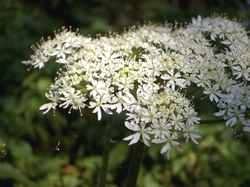
Road verges: Individual flowering plants such as creeping thistle, pricklysowthistle, hogweed, meadow sweet and greater bindweed may still be found along the road sides where they have escaped the mower. However they usually look lonely and bedraggled.
| ||||||||||||||||||||||||||||||
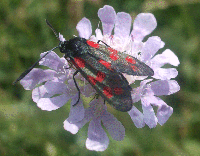
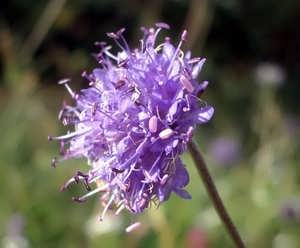
Chalk and limestone grasslands: The last great flowering show of the year is the devil's-bit scabious (see image at the top of the page). Although in flower during August and September you may find it in October as well. It is a beautiful plant with elegant, but rather hairy, leaves and seemingly delicate purple domed flower heads. As there are so few other plants on show now a large stand of it can stop you in your tracks. | ||||||||||||||||||||||||||||||
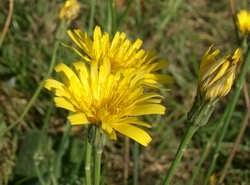
Meadows (neutral) and flood plain grasslands: These will be short and grazed until Autumn is out. However where there is less grazing common cat's-ear may still be in flower.
| ||||||||||||||||||||||||||||||
| Acidic grasslands: | ||||||||||||||||||||||||||||||
| Heathlands: | ||||||||||||||||||||||||||||||
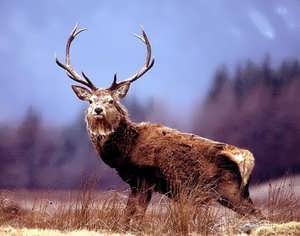
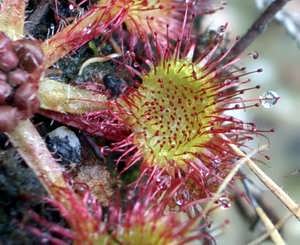
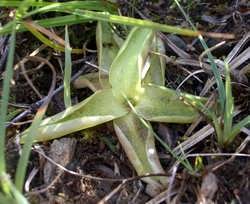
| Mountain and Moorlands (uplands): the breeding waders and summer migrants have now left, leaving the uplands to the grouse, ptarmigan, deer and mountain hares, where the ground is highest and countryside at its wildest. Some plants may still be found such as the exotic looking sundew, along side the butterwort, where the ground is at its poorest and wettest.
| ||||||||||||||||||||||||||||||
Rivers and ponds (including bogs and mires): The riverside vegetation is still lush and full. Many of the common reed, common reedmace and branched bur-reed type species that fringe the river will be bearing their seed heads and some meadowsweet flowers can still be seen. | ||||||||||||||||||||||||||||||
| Sea and the sea shore (including estuaries): Estuaries are filling up with more waders and wild fowl. | ||||||||||||||||||||||||||||||
| Mammals: Mammals such as bats and rodents will soon be preparing for hibernation. Some species such as the badger which do not hibernate will be fattening themselves up for the lean months ahead. | ||||||||||||||||||||||||||||||
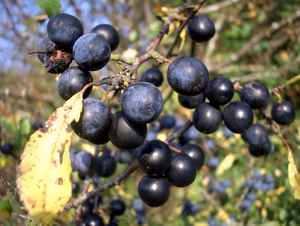
| Birds: One of the delights of this time of the year (October and November) is the arrival of large flocks of winter thrushes moving slowly southwards - the redwing and the fieldfare. They come from Iceland and Scandinavia where they will have breed. The redwing is a smallish bird with a prominent white eye stripe and bright red flashes under its wings. The fieldfare is quite a bit larger, has a slate grey rump and red, yellowy speckled front and brown wings. They noisily respond to disturbance with a loud chattering noise. The large flocks seek out berries such as on the hawthorns and fruit, particularly if the ground is frozen. They will readily move around Britain and across the north sea depending on the harshness of the weather in search of food supplies. These species migrate at night and when together frequently call with a high pitched, clear whistle. Most nights they can be heard passing over head. Migration comes to an end for most birds in October. Some warblers and house martins may still be seen into October but will not see out the month. | ||||||||||||||||||||||||||||||
| Amphibians & Reptiles: Around mid-October toads go into hibernation, finding logs or stones to hide beneath until Spring arrives once more. Frogs also hibernate at this time, at the bottom of ponds or some other sheltered place, ready to emerge again in the following January. | ||||||||||||||||||||||||||||||
| Insects: | ||||||||||||||||||||||||||||||
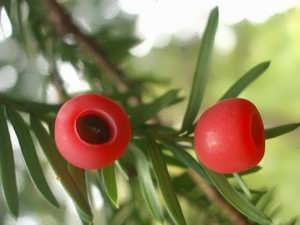
Plants: The trees that bear their seeds with wings are now dropping them as they have matured and are dry, papery and ready to spin away from the parent tree. Hornbeam , sycamore, field maple and ash all use this method of seed dispersal. The ash keys will however hang onto their seeds well beyond when their leaves have made the journey to the ground. The yew berries are ripening and attracting birds to the seeds, which hang amidst its dark evergreen needles like miniature stuffed olives.
| ||||||||||||||||||||||||||||||
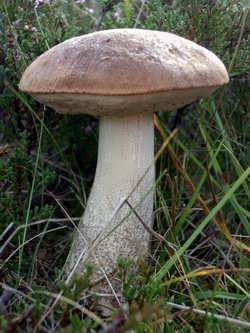
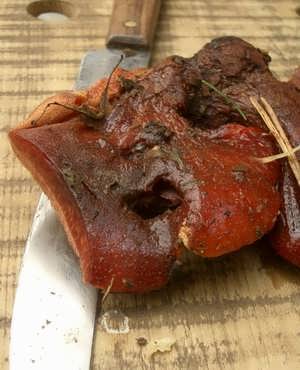
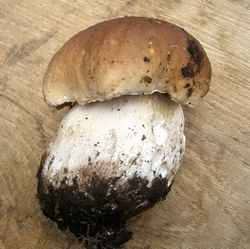
| Fungi: There are many forms (approximately 6000 in Britain) and the world of fungi is exciting and extremely varied. What appears at this time of year above ground is the spore bearing part of the fungus and only a small part of this organism. Under the ground, where many grow, are meters and meters of tiny filaments (known as hyphae) which reach out into the organic matter around which the fungus 'digests' as its food source. They require the wet conditions of Autumn to be able to thrive. Fungi play an incredibly important role in breaking down organic material (i.e. dead leaf litter, dead animals etc.) and recycling, and without them there would be mountains of the stuff! Also they form very intimate links with the roots of all plants. The fungi help the plants access nutrients and for which the fungus gets a place to grow and thrive. | ||||||||||||||||||||||||||||||
 | ||||||||||||||||||||||||||||||
 Autumn colours in the hedgerows and woodlands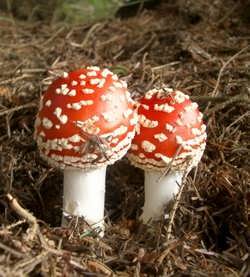
All images and text are copyright PMcS 2006